The Difference Between Digital, Letterpress, and Foil Printing
Choosing how your wedding invitations are printed is one of those decisions that feels small — until you see (and feel) the difference. Printing method affects not only how your stationery looks, but how it feels in your hands, how it photographs, and how it’s remembered.
Below, we’re breaking down the three most common printing methods used for wedding stationery — digital, letterpress, and foil — so you can choose what best fits your vision, timeline, and priorities.
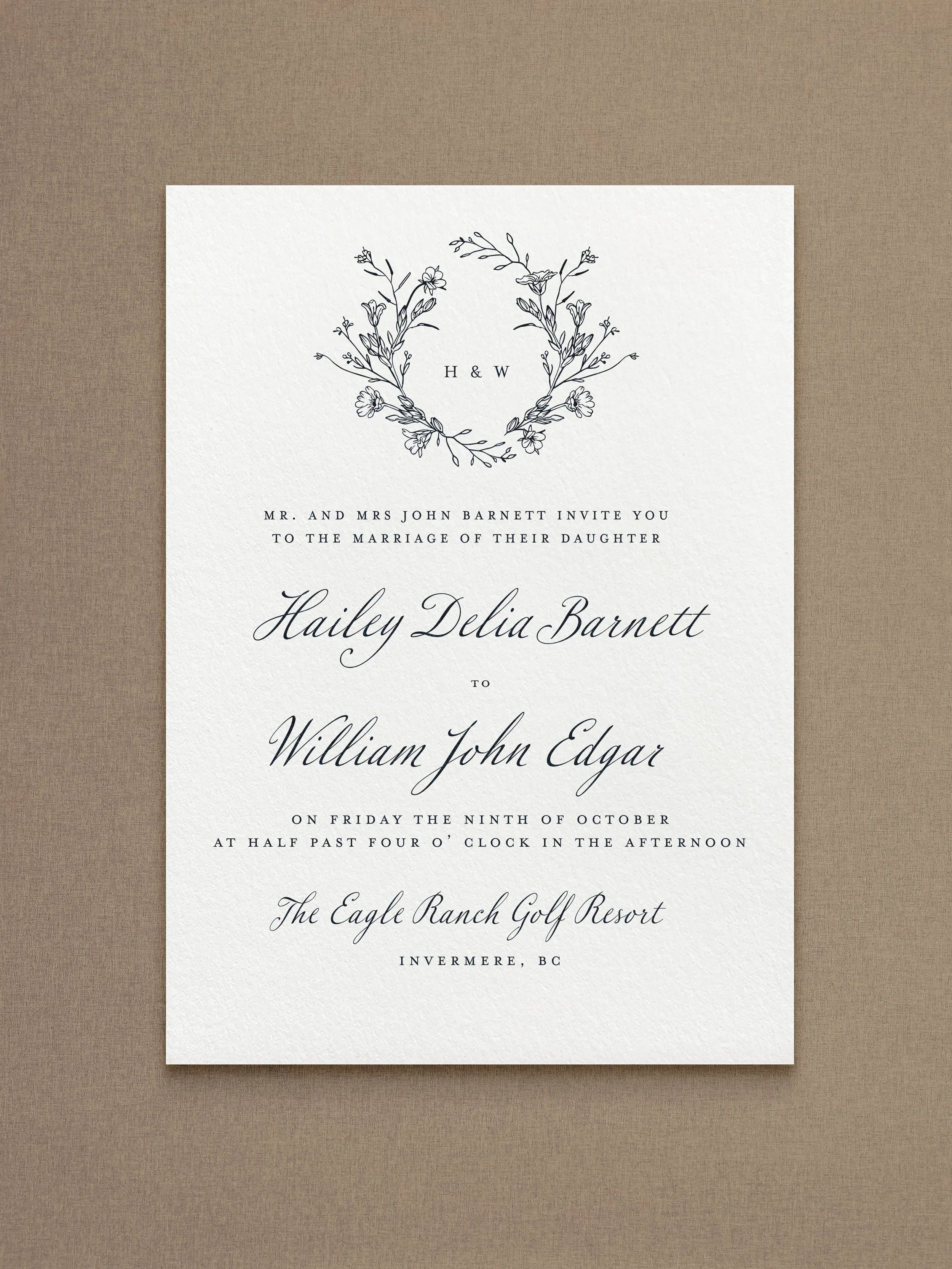
No. 2 Suite in Digital
Digital Printing $
Clean, versatile, and beautifully modern
Digital printing is the most widely used method for wedding invitations — and when done well, it’s anything but ordinary.
Ink is applied directly to the paper surface, allowing for crisp text, soft colour transitions, and detailed artwork. When paired with high-quality cotton or textured paper, digital printing offers a refined, understated finish that suits modern, romantic designs beautifully.
Best for:
Semi-custom invitation suites
Soft colour palettes and fine details
Couples who value flexibility and efficiency
Things to know:
The ink sits on top of the paper (no texture)
Ideal for shorter timelines
The most budget-conscious option without sacrificing quality
At Evergreen & Faye, our digital printing is intentionally paired with premium paper stocks to ensure the final result still feels elevated and tactile.
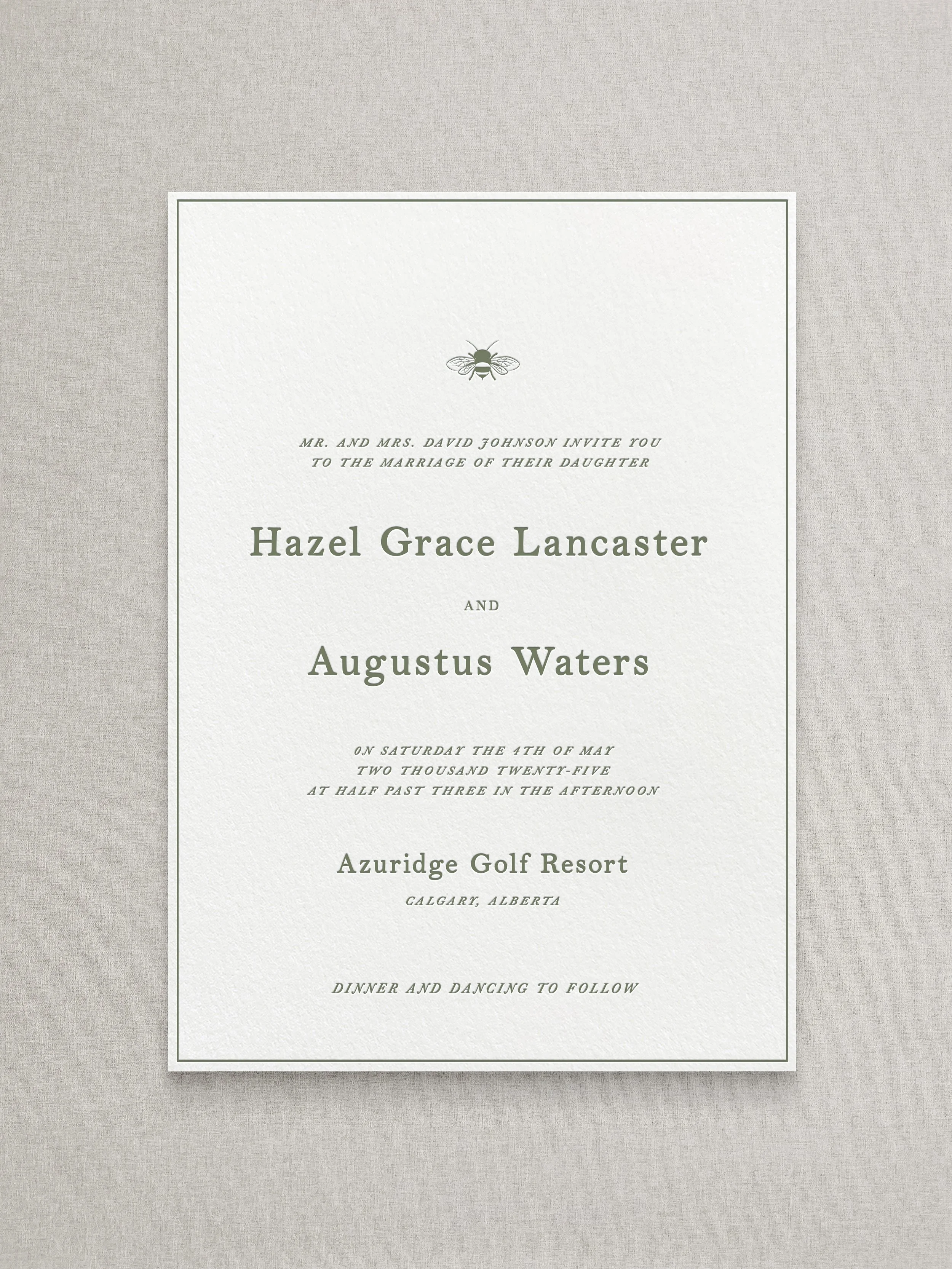
No. 1 Suite in Letterpress
Letterpress Printing $$
Timeless, tactile, and heirloom-worthy
Letterpress is a traditional printing method that presses inked plates into soft paper, creating a subtle debossed impression you can feel.
This technique is synonymous with craftsmanship. It’s quiet, elegant, and deeply tactile — the kind of detail guests notice when they run their fingers across the paper.
Best for:
Formal or classic weddings
Minimal designs with intentional spacing
Couples who love texture and tradition
Things to know:
Limited colour options per press run
Requires thicker, softer paper
Longer production timelines and higher investment
Letterpress is less about bold colour and more about restraint, balance, and timeless beauty.
Foil Stamping $$$
Luminous, romantic, and unmistakably special
Foil stamping uses heat and pressure to apply metallic foil to paper, creating a reflective finish that catches the light beautifully.
It’s often chosen for names, headings, or monograms — moments meant to stand out. Foil adds drama without excess when used thoughtfully.
Best for:
Elegant or evening weddings
Accent text and focal details
Couples who love a hint of luxury
Things to know:
Foil is reflective and light-sensitive
Works best with simple typography
More expensive than digital printing
Foil is not subtle — but when paired with minimal design, it becomes striking rather than flashy.
Why Letterpress and Foil Printing Cost More?
Letterpress and foil printing are considered specialty printing methods because they require additional materials, setup, and hands-on production that go far beyond standard digital printing.
Custom Plates & Setup
Both letterpress and foil stamping require custom metal plates to be created specifically for your design. These plates are made once per design and used to transfer ink or foil onto the paper, adding an upfront setup cost that doesn’t exist with digital printing.
Specialized Equipment
Unlike digital printing, which is automated, letterpress and foil stamping rely on specialized presses and experienced operators. Each piece is printed individually, often by hand, making the process significantly more time-intensive.
Slower, More Careful Production
Because pressure and alignment are critical, these methods can’t be rushed. Paper is fed one sheet at a time, and adjustments are made throughout the run to ensure consistent impressions and clean results. This slower pace is part of what gives these methods their signature depth and refinement.
Premium Paper Requirements
Letterpress and foil printing work best on thicker, softer papers that can handle pressure without damage. These premium stocks cost more than standard papers and contribute to the overall investment.
Limited Corrections & Reprints
With specialty printing, there’s little margin for error. Any changes or reprints require new plates and additional setup, which increases cost — another reason proofs and approvals are so carefully managed.
In Short
You’re not just paying for ink or foil — you’re investing in:
Craftsmanship
Time-intensive production
Specialized materials and equipment
A tactile, heirloom-quality result
These methods are intentionally slower and more hands-on, which is exactly what makes them feel so special.
A Thoughtful Way to Add Luxury — Without Printing Everything in Foil or Letterpress
If you’re drawn to the look and feel of foil or letterpress but want to be mindful of budget, incorporating these methods as accents is one of the most effective ways to elevate your suite.
Rather than printing every card using a specialty method, many couples choose to highlight one meaningful element — such as a monogram, crest, or small icon — in foil or letterpress. This creates a layered, refined look while keeping production efficient.
Because these accents can be repeated throughout the suite, they offer incredible value:
A foil or letterpress monogram on the invitation
The same icon carried onto RSVP cards or detail cards
Continued use on day-of stationery such as menus, place cards, programs, and signage
This approach allows your stationery to feel cohesive and luxurious from the first invitation to the final place setting — without the cost of specialty printing across every piece.
It’s a quiet kind of luxury: intentional, considered, and timeless.
Which Printing Method Is Right for You?
There’s no “better” option — only what aligns with your priorities.
Choose digital printing if you want flexibility, softness, and a clean modern feel.
Choose letterpress if texture, tradition, and craftsmanship matter most.
Choose foil stamping if you’re drawn to light, contrast, and quiet drama.
Many couples also combine methods — for example, digital printing with foil accents — to create something layered and intentional.
A Final Note
Your invitations set the tone for everything that follows. Printing method isn’t about trends or rules — it’s about how you want your wedding to feel from the very first touch.
If you’re unsure which approach best suits your suite, we’re always happy to guide you toward the option that feels most like you.